
4.5 · 5 reviews
4.5 · 5 reviews
MTF (male to female)
MTF Surgery Guide: Sex reassignment surgery, MTF, male to female, vaginoplasty
MTF (male-to-female) surgeries are fundamental surgical interventions for transgender people who wish to carry out their gender transition. Through these procedures, they can harmonize their physical appearance with their gender identity. I
Updated on November 4, 2026
The essentials at a glance
From
€8,000
Anesthesia
Systematic general anesthesia
Duration
After MTF surgery, hospitalization of between 6 and 8…
Read moreResults
MTF surgery success rates are high, especially with…
Read moreRecovery
Hospitalization of 6 to 8 nights And a convalescence…
Read moreProcedure
In order to be eligible for sex reassignment surgery…
Read moreMTF (male to female): what it is and how it works
MTF Genital Surgery: Understanding Different Vaginoplasty Techniques
Feminizing genital surgery allows for the reconstruction of a vulva, with or without a vaginal canal. Several techniques exist: penile inversion, skin graft, peritoneal vaginoplasty, and intestinal vaginoplasty.
The choice depends on your anatomy, your medical history, your expectations regarding vaginal penetration, and the aftercare you will be able to follow after the procedure.
No technique is systematically the best for all patients.
Vulvoplasty without depth: external reconstruction
Vulvoplasty, also called "zero depth" surgery, reconstructs the external genitalia: labia majora, labia minora, clitoris, and shallow vaginal opening. It does not create a canal that allows for vaginal penetration.
It may be suitable for people who desire genital feminization without the need for a penetrable vagina.
Its main characteristics are:
- The absence of dilations intended to maintain a vaginal canal.
- A procedure generally less complex than vaginoplasty with depth.
- The reconstruction of a sensitive clitoris, with preservation of its nerve supply.
This option should not be considered as simply a preliminary step before complete vaginoplasty: subsequent conversion requires a new evaluation and additional reconstruction.
Vaginoplasty by Penile Inversion
This technique uses the skin of the penis, inverted inward, to line the vaginal canal. The genital tissues are also reorganized to reconstruct the vulva and clitoris.
This is a reference technique, practiced for many years. It allows for the creation of a vaginal canal without removing an intestinal segment.
The achievable depth depends especially on the amount of available skin, its quality, and the anatomical space in which the canal can be created. Circumcision or a reduced amount of tissue may require a graft supplement.
The skin does not convert into vaginal mucosa. External lubricant is needed for dilations and generally for penetration. Regular dilations allow for maintaining the depth and width of the canal.
Vaginoplasty with Scrotal Skin Graft
Scrotal skin can complement penile inversion or constitute a significant portion of the vaginal lining. Depending on needs, a graft from another area, such as the groin or lower abdomen, may also be considered.
This approach provides more tissue when penile skin alone is insufficient. However, it does not guarantee precise depth: the result also depends on anatomy and scarring.
As with penile inversion:
- The canal requires maintenance through dilations.
- External lubricant remains necessary.
- Skin areas intended for the interior of the vagina must be evaluated for hair.
Hair removal during the procedure does not systematically replace prior permanent hair removal. The surgeon specifies the areas to be treated and the appropriate method.
Peritoneal Vaginoplasty: PPV and Related Techniques
The peritoneum is the membrane that lines the interior of the abdominal cavity. In peritoneal vaginoplasty, a portion of this tissue is mobilized to form part of the vaginal canal, often its deep portion.
The reconstruction generally combines genital tissues with peritoneal flaps. It can be performed by laparoscopy or with robotic assistance, depending on the team. The terms PPV, peritoneal vaginoplasty, and peritoneal pull-through encompass variants: therefore, it is useful to ask what tissues will be used for each part of the canal.
This approach may be considered during a first procedure or for certain revisions, especially when local tissues are insufficient. It does not require the removal of an intestinal segment, but involves abdominal surgery with its own risks.
Peritoneal tissue has secretory capacity, but this does not guarantee sufficient lubrication for sexual intercourse or lubrication identical to that of a non-operated vagina. Supplementary lubricant may still be necessary. Dilations are also part of the aftercare following this surgery.
Intestinal Vaginoplasty with Sigmoid Colon
This technique uses a segment of the sigmoid colon to create the vaginal canal. The surgeon then restores the continuity of the intestine.
It may be proposed when genital tissues are insufficient or in certain secondary reconstructions. The intestinal segment provides a lining that depends less on the amount of available skin and naturally produces mucus.
There are two approaches:
- Open surgery, with an abdominal incision.
- Laparoscopy, performed through several small incisions.
Both approaches use the same type of tissue. The difference concerns mainly the access to the abdomen, and not a guarantee of superior depth.
This surgery involves specific digestive risks: leakage at the intestinal connection site, transit disorders, inflammation of the segment used, or abundant secretions. Discharge and odors may occur that require evaluation.
Intestinal mucus does not correspond to lubrication triggered by sexual arousal. Its amount may be insufficient or, conversely, bothersome. The dilation protocol is individualized, especially to prevent narrowing of the vaginal opening: it should not be assumed that this technique eliminates all maintenance.
Sensitivity, Pleasure, and Depth: Distinct Objectives
The technique used to line the vaginal canal does not, by itself, determine sexual sensitivity. Clitoral reconstruction seeks to preserve the nerve structures responsible for pleasure.
Sensitivity evolves during healing. The possibility of achieving orgasm, comfort during penetration, and final appearance vary from person to person. No method allows for guaranteeing a precise aesthetic or sexual outcome.
Depth should also be distinguished from functionality: a comfortable canal, sufficiently wide and adapted to your expectations is not reduced to a measurement in centimeters.
How to Choose the Right Technique?
The evaluation is based on several elements:
- Your desire to have or not have vaginal penetration.
- The amount and quality of available tissues.
- Your previous procedures and your abdominal or digestive history.
- Your state of health and factors that may influence healing.
- Your ability to follow dilations, local care, and follow-ups.
Surgical revision can address a loss of depth, narrowing, or functional difficulty. It is not automatically a "technological improvement": the technique must address the identified problem.
Costs and Clinic Options
The cost of MTF gender reassignment surgery varies significantly depending on the country, surgical technique, and chosen clinic:
- Spain: 25,000 - 45,000 euros
- Thailand: 12,000 - 18,000 euros (specialized clinics with extensive experience in gender surgery)
- Turkey: 10,000 - 16,000 euros
- United States: 50,000 - 75,000 dollars
These costs generally include hospitalization, surgical equipment, and immediate postoperative care. Follow-ups, dilations, and possible revisions may involve additional expenses.
Recovery and Postoperative Care
The recovery period depends on the technique used:
First 2-3 weeks: Strict rest, avoid sitting for prolonged periods, pain management, and wound care.
4-8 weeks: Beginning of vaginal dilations according to the surgeon's protocol. Dilations are essential for maintaining the depth and width of the canal.
3-6 months: Gradual return to normal activities. Sensitivity continues to improve during this period.
Long term: Regular dilations are necessary for life, although frequency may decrease over time. Full sexual function is generally achieved after 6-12 months.
Prerequisites and Consultation
Before MTF genital surgery, most surgeons require:
- Psychological evaluation and recommendation letters from mental health professionals specialized in gender identity
- Hormone therapy for at least 12 months (according to WPATH guidelines)
- Legal age of majority (18 years in most countries)
- Good general health and absence of medical contraindications
- Clear understanding of expected outcomes and commitment to postoperative care
The initial consultation evaluates your anatomy, discusses your goals, and determines which technique is most appropriate for your specific situation.
MTF (male to female): who is it for?
In order to be eligible for sex reassignment surgery (SRS) in Thailand, the patient must meet several criteria:
- Be at least 20 years old (or have parental authorization if under 20 years old).
- Have taken male hormones for at least one year.
- Be in good physical condition (BMI below 26).
- Have lived as a man for at least one year.
- Have been mentally evaluated and deemed fit for surgery.
Your options
MTF (male to female): offers from our partner clinics
5 clinics matching your criteria
Yanhee Hospital
Bangkok, Thailand
4.7Google reviews Gold Partner
- Orchidectomy · €2,118
- MTF (male to female) · €10,201
- SRS Penile Inversion and Scrotal Skin Graft · €10,201
- +3
from €2,118
Ekol Hastanesi
Izmir, Turkey
3.7Google reviews- Breast augmentation TS · €3,200
- MTF (male to female) · €8,000
from €3,200
LIV Hospital
Istanbul, Turkey
4.4Google reviewsGold Partner- Voice Change - Type IV Thyroplasty · €2,561
from €2,561
Wansiri hospital
Bangkok, Thailand
4.8Google reviewsGold Partner- MTF (male to female) · €9,155
- SRS Penile Inversion and Scrotal Skin Graft · €9,155
- SRS with Sigmoid Colon Graft · €11,770
- +1
from €9,155
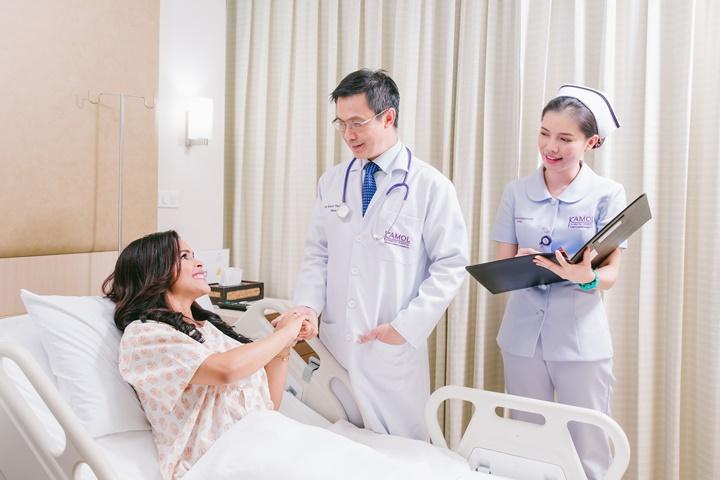
Kamol Hospital
Bangkok, Thailand
4.4Google reviewsGold Partner- Breast augmentation TS · €3,138
- Orchidectomy · €3,295
- Voice Change - Type IV Thyroplasty · €4,119
- +5
from €3,138




MTF (male to female): prices by country
MTF (male to female)


Breast augmentation TS
Voice Change - Type IV Thyroplasty
Frequently asked questions
How the treatment works, step by step
Anesthesia
Systematic general anesthesia
Duration
After MTF surgery, hospitalization of between 6 and 8 days is necessary to ensure medical follow-up and safe recovery. Postoperative care includes medical supervision, pain management, wound care and psychological support.
In general, a convalescence period of between 25 and 30 days in the country is recommended.
Duration of the intervention
The duration of MTF interventions varies between 4 and 7 hours, with hospitalization of 6 to 8 nights. Convalescence usually lasts 2 to 3 weeks, and definitive results are observed after several months.
What happens after treatment?
Hospitalization of 6 to 8 nights And a convalescence of at least 2 to 3 weeks depending on the intervention.
How long do results last?
MTF surgery success rates are high, especially with experienced surgeons. Potential risks include infections, anesthetic complications, excessive bleeding, and neovagina retraction. It is essential to clearly understand these risks and strictly follow medical recommendations to minimize complications.
The risks associated with this type of intervention may include:
- Postoperative infection
- Anesthesia-related complications
- Excessive bleeding
- Suture rupture
- Neovagina retraction
- Suture rupture
...
It is essential to understand these risks well and follow medical recommendations to minimize possible complications.
However, if the surgeon is specialized and experienced, and the candidate does not present special complications, success statistics are very high. Some of the surgeons we propose perform practically only this type of intervention.
Questions and answers about MTF surgery
What is MTF surgery?
MTF surgery (male to female) refers to a series of gender-affirming procedures designed to help trans women achieve a feminine appearance. This can include vaginoplasty, breast augmentation, facial feminization surgery, and other procedures.
What is vaginoplasty?
Vaginoplasty is a surgical procedure that creates a neovagina using tissue from the penis and scrotum. It is one of the most common MTF surgeries, aimed at providing both aesthetic and functional results.
What is facial feminization surgery (FFS)?
Facial feminization surgery (FFS) comprises a series of procedures designed to modify facial features to appear more traditionally feminine. This can include a brow lift, rhinoplasty, jaw contouring, and much more.
What is breast augmentation?
Breast augmentation for MTF patients consists of placing implants to create a fuller and more feminine breast. This procedure is usually combined with hormone therapy to achieve the desired breast size and shape.
What is the recovery time for MTF surgeries?
Recovery time varies depending on the surgery. Vaginoplasty typically requires 4 to 6 weeks of recovery, while facial surgeries and breast augmentation may require 2 to 4 weeks. Following postoperative instructions is essential for optimal recovery.
Does insurance cover MTF surgeries?
Coverage varies depending on the insurance company and country. Some companies cover gender-affirming surgeries, while others may cover only certain procedures. It is important to consult with your insurance company to learn about your coverage options.
Can you have sexual sensations as a woman?
Yes, many people who have undergone vaginoplasty can experience sexual sensations. Surgeons strive to preserve or reconnect nerve endings to maintain sensitivity, and over time, patients typically report satisfying sexual experiences. However, results may vary depending on individual circumstances and the surgical technique used.